
Traditional art draws the line between illusion and reality the moment you touch the brush.
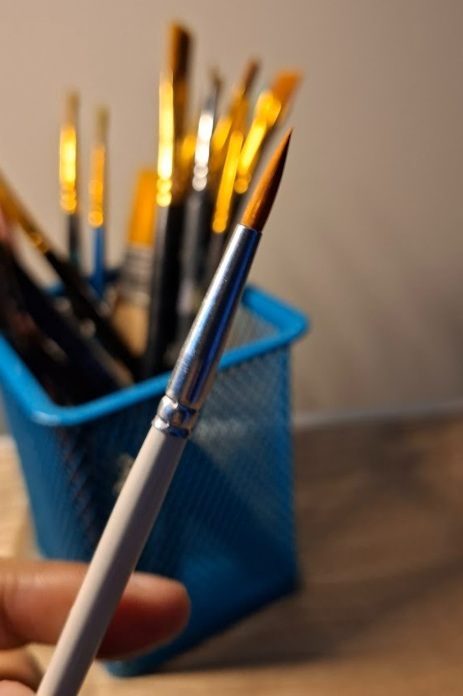
It keeps the artist grounded, preventing them from going too far into illusion or becoming lost in it in an unhealthy way.
The moment you touch the brush, there is no undo button, no infinite layers, no endless revisions hiding behind a screen. The hand meets the surface directly. Paint touches canvas, graphite touches paper, and suddenly the artist is confronted with something real. A mark that cannot be taken back easily. A decision made in the present moment.
This simple contact becomes grounding.

Traditional mediums require attention, patience, and a certain humility. The artist must slow down enough to observe what is happening in front of them, the texture of the paper, the flow of paint, the pressure of the hand. Each movement becomes part of a conversation between intention and material.
In that process, illusion still exists. Every painting is, in some way, an illusion, a suggestion of light, form, atmosphere, or emotion. But the physical act of making the work keeps the artist tethered to reality. The brush, the pigment, the surface, they remind you where you are.
I guess, this is why many artists return to traditional mediums even in a digital age. Not because digital tools lack value, but because the physical act of creation holds a certain balance. It keeps imagination expansive while the body remains present.
The brush becomes an anchor between two worlds: the imagined and the real. 🎨
I create digital and traditional art inspired by nature, music, life, and spirituality. writeme@lheanstorm.com for Commissions, Web3 collabs & Inquiries.
You must be logged in to post a comment.